

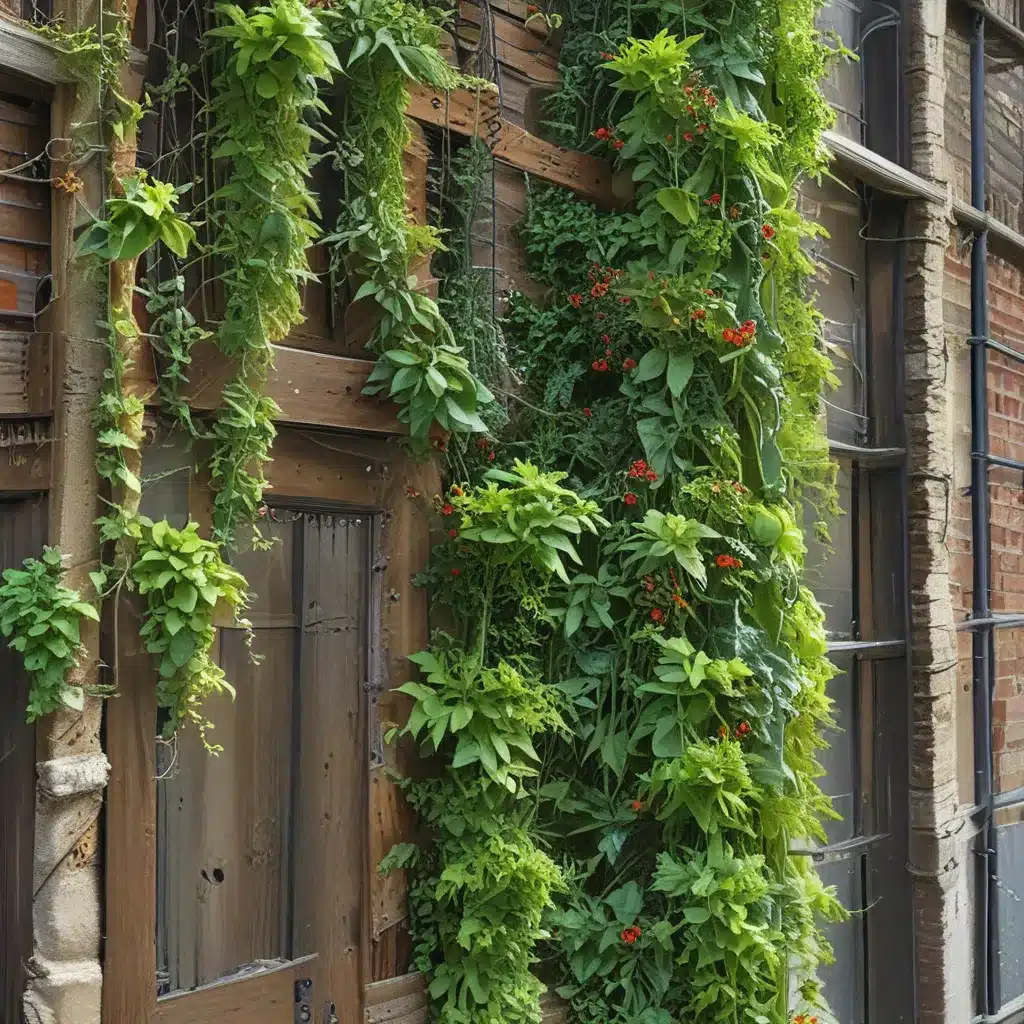
Vertical Gardening: Going Up with Vines and Plants
Reaching New Heights in Small Spaces
I don’t know about you, but I don’t have a big space to put my vegetable garden. But I do have big goals for what I want to grow – especially now as food prices continue to soar. Therefore, I began to explore my options for where I could go and grow next.
When it comes to vegetable gardening, I have several beds no wider than three feet that run along the perimeter of my fence. That’s not a large space to work with, and with my love for vine vegetables that take up a lot of room – cucumbers, eggplant, beans, etc. – I decided to go vertical as well as horizontal last year. In summary, here are seven words about it: fewer pests, abundant harvest, and easier picking.
In addition, vertical gardening allows for better airflow which helps to prevent issues such as powdery mildew. Plus, slugs will have more difficulty eating or damaging the fruits of your labor. Talk about a win-win! Vertical gardening will also allow you to see your produce better and thus eliminate the “grown too big, not at its peak flavor” problem that can come with horizontal gardening. Goodbye, monster squash!
Gardening upward can also allow plants to ripen sooner given the additional sun exposure. There’s just something magical about walking under a lush canopy of vines and produce!
The When and How of Vertical Gardening
The best time to grow a vertical garden? Anytime! You can start out vertically as you begin a garden or you can add vertical gardening to your already existing horizontal garden. It’s never too late – or too early – to start.
With a bit of planning and imagination, a vegetable garden can be grown anywhere given you have enough sun and some shade, regardless of space. And since a vertical garden or green wall would eliminate most bending and extensive work, it’s a great option for seniors and those with mobility or other physical limitations. Moreover, you can DIY many kinds of planters with a few inexpensive craft or salvaged items to create your own one-of-a-kind vertical growing space. Therefore, getting started doesn’t have to cost an arm and a leg.
A fence, trellis, pergolas, posts, poles with strings or nets, and cages can all serve as great vertical spaces for beans, peas, tomatoes, squash, cucumbers, melons, pumpkins, sweet potatoes, and more. For example, you can use the rungs of a ladder to train vines while placing the vegetable (e.g. pumpkins) on its steps for further support. So let your creativity run wild! As a bonus, no matter how you build them, trellis structures can serve double duty as a privacy screen for a patio or small yard. Once the lush vines of your veggie plants grow upwards, they will have your small space feeling like a garden oasis. Unless the neighbors stop by to check out what you’re growing, that is.
Choosing the Right Vertical Structure
The first step is to know your plants. Some, like beans, will happily twine themselves around whatever support they are given. Others, like pumpkins, will need to be tied to a structure with twine. So start with a little research into the plants themselves.
Once you have your plants decided, you can consider your vertical structure. Some options include using 8-12 bamboo stalks tied at the top, or building a trellis out of branches. The possibilities are endless!
The next step is to get your plants and get growing. Gardening is a grand experiment, so give it a shot and see what works for you. And let me know! I love to hear about adventures in the garden.
Going Vertical with Vines and Melons
One of my favorite vertical gardening experiments has been growing watermelons and other melons on a trellis. A1 Landscape Construction, the landscape design and construction company in Temecula, California, has some great advice on this.
If you’ve been avoiding growing watermelons because your garden is too small, wait no longer! You can grow a watermelon plant in a small 4 x 4 raised garden bed if you use a trellis. A single watermelon plant given good growing conditions can almost fill a 15-foot-wide circle on the ground. Yikes, there’s no avoiding that they are large, vigorous plants. But if you select the right variety, take good care of them, and train them up a trellis, you can enjoy fresh melons from your own small garden beds.
The key is making sure these plants get full sunlight – 8 hours or more. Watermelons thrive in full sun. However, a couple of years ago I took a chance and planted a watermelon in a 50-square-foot bed about 3 x 16 with two young 2-year-old espalier apple trees. It only received about 6 hours of sunlight, but I still harvested 3 large watermelons from that bed. So sometimes you can succeed even if you break the rules. Just don’t count on a good harvest with less than full sunlight of 8 hours or more.
Watermelon plants have massive root systems. Just because they will be growing vertically up a trellis doesn’t mean that their roots will remain in a small area at the base of the trellis. These roots will go down as deep as they can and sideways for a long distance. I’ve found the roots growing several feet outside the small garden bed they were planted in. This is one reason that I don’t put weed barrier under my raised garden beds – I want my plants to grow as large and vigorously as possible to produce a big crop.
Trellising Tricks for Melons and Squash
When it comes to trellising watermelons and other melons, you’ll want to select a variety suited for trellising and your climate. Watermelons love hot weather and often take 90-100 days to mature. They generally don’t thrive in cool, cloudy climates or short growing seasons. However, some varieties have been bred to mature quickly or tolerate cooler weather.
I like to grow Blacktail Mountain – it can ripen in just 75 days and will grow well in both cool and hot weather. It usually produces icebox melons around 10 pounds, which is a nice size to trellis. I’ll be planting one in late May and another in July in order to extend the harvest. But this variety really surprised us last year – one of the watermelons hanging on our trellis weighed 17 pounds! That one almost popped out of the sling we made out of nylons. I wouldn’t normally try to trellis melons that large, but we weren’t given a choice.
When it comes to supporting the fruit, you’ll need to build sturdy trellises. Given deep soil and good growing conditions, I normally expect to harvest 20-30 pounds of watermelon growing on a 4-foot-wide and 7-foot-tall trellis. That’s a lot of weight, so make sure your trellis is up for the task! Our favorite is made from a livestock panel cut in half and attached to two t-posts pounded into the soil. That will hold almost anything.
I’ve also used trellises made from wood frames and welded wire fencing, screwed to the outside of small wooden garden beds. And I’ve learned that I can use trellises on both the north and south sides of my raised beds – the mid-summer sun is high in the sky and will supply full sunlight to both trellises as it travels.
Taming Those Vines
Watermelon plants grow fast – as much as 1-2 feet per week. They will not climb a trellis by themselves, so you need to tie the vines to the trellis as they grow. Don’t count on their tendrils to hold the plants secure, especially during wind storms or when they have heavy fruits hanging from them.
I like to use a loose figure-8 loop wrapped just below a leaf joint to hold the vines up. I’ll keep and train most of the main vines up my trellis, but I’ll prune off some of the side shoots if they start becoming overcrowded. Watermelons will perform better if I keep as many vines as I can comfortably fit on the trellis.
And let’s not forget about supporting the fruit itself. Although butternut squash fruit never need to be supported, once the fruit of your watermelons start weighing more than a few pounds, they will fall off the vines and break. Been there, done that! You’ll need to support them by creating a sling attached to the trellis. Last year, I used nylon stockings given to me by a friend – I cut two slings out of each leg, tied the bottoms closed, and slit the top part into two pieces so I could tie it to the trellis.
Watering Woes and Harvest Happiness
Vines growing on trellises are exposed to the wind and lose more moisture than vines growing on the ground. Make sure you water your plants once or twice a week during dry weather. You want the water to soak deep into the soil, so I also mulch the surface to slow evaporation. This is another reason I don’t use weed barrier under my raised beds – I want those plant roots to grow as deep as possible.
Finally, when it comes time to harvest, look for the tendril next to the melon stem to turn brown and start drying up. That’s your sign the watermelon will be ripe and ready to enjoy. Just be careful not to overload those trellises – I learned the hard way that 17-pound melons are pushing the limits!
Vertical gardening has truly been a game-changer for me. It’s allowed me to grow an abundance of produce in my limited garden space, with less effort and fuss. And the visual appeal of lush vines cascading over trellises? Priceless. So why not give it a try in your own backyard oasis? Your taste buds (and your back) will thank you.

