

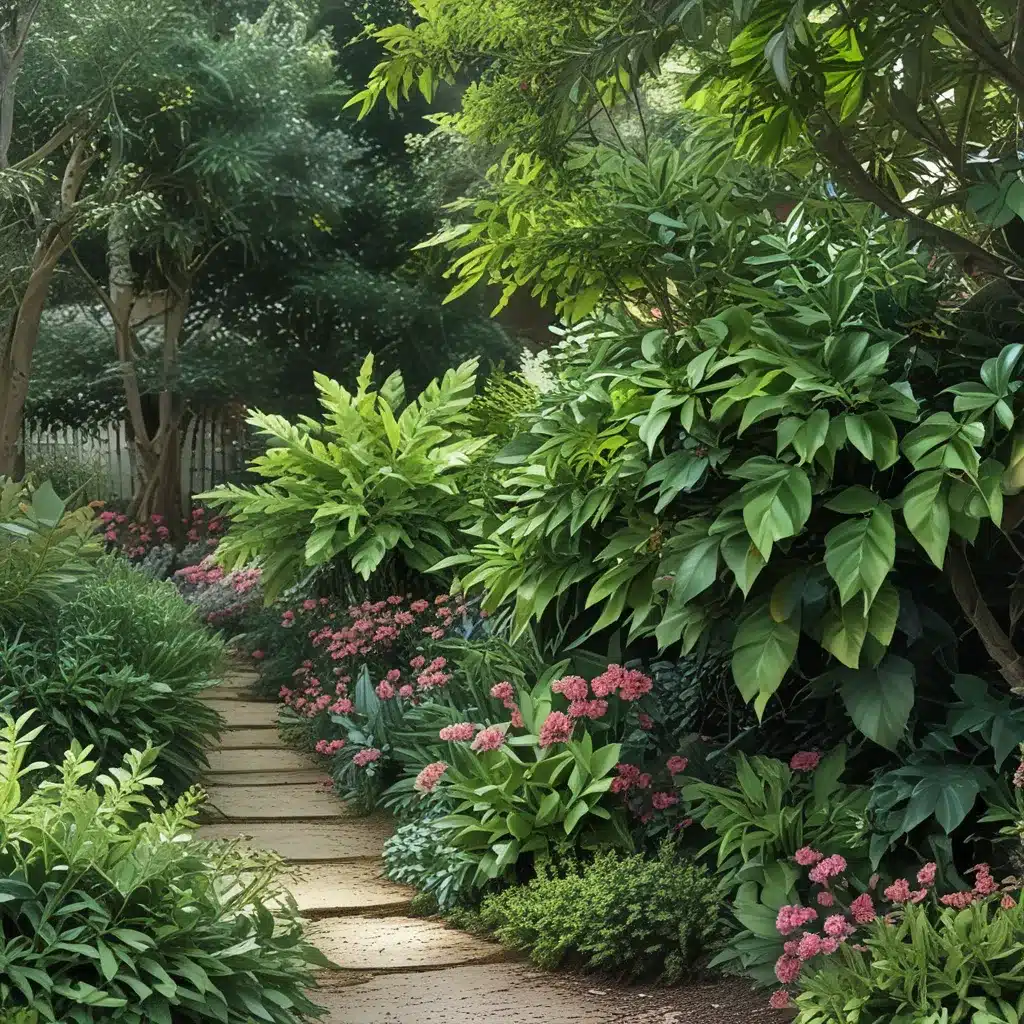
Taming the Tenebrific Terrors
Ah, the joys of gardening under the mighty redwoods – those towering titans that cast their benevolent shade over the land. As a landscape designer in Temecula, California, I’ve had the privilege of working with many clients who are blessed (or cursed, depending on your perspective) with these majestic trees gracing their properties.
Sure, the redwoods may provide a cool, serene oasis in the hot, sunny days of summer, but they also present a unique set of challenges for the green-thumbed among us. That dense, heavy canopy can make it downright difficult to coax even the hardiest of plants to thrive in those shaded, problem spots. But fear not, my fellow gardeners! I’ve spent years studying the secrets of the redwood understory, and I’m here to share my hard-won knowledge with you.
Embrace the Acidic Abyss
One of the first hurdles you’ll face when gardening under the redwoods is the acidic nature of the soil. As those majestic “redwood feathers” (as I affectionately call them) decompose, they leach tannins into the earth, creating a veritable pH pickle. But don’t despair! There are plenty of wonderful plants that absolutely revel in these acidic conditions.
As our friends at North Coast Gardening point out, ornamental grasses, ferns, and redwood forest natives are all natural choices for thriving in this acidic wonderland. In fact, I’ve had great success with Douglas iris (Iris douglasiana), autumn fern (Dryopteris erythrosora), and the enchanting redwood sorrel (Oxalis oregana) – all of which seem to positively glow under the dappled light of the towering trees.
Conquering the Crunchy Carpet
And then there’s the matter of that endless, ever-accumulating layer of redwood leaves. Sure, they may make for a lovely, natural-looking mulch, but they can also smother delicate plants if you’re not careful. The key is to choose sturdy, leathery-leaved species that can stand up to the weight of those “redwood feathers” without getting crushed.
One of my personal favorites is the Japanese forest grass (Hakonechloa macra ‘Aureola’) – its graceful, golden foliage seems to part the leaf litter with ease. And the black mondo grass (Ophiopogon planiscapus ‘Nigrescens’) is another stalwart, its deep, inky hue providing a striking contrast against the rust-colored duff.
Taming the Thirsty Titans
Of course, no discussion of gardening under redwoods would be complete without addressing the issue of water. These towering trees are absolute water-guzzlers, and their ravenous roots can quickly outcompete any poor, hapless plant trying to establish itself in their domain.
As the experts at Fine Gardening suggest, the key is to create a well-draining, highly amended soil that can provide ample moisture and nutrients for your chosen plants. A generous layer of compost or wood chip mulch can work wonders, as can strategically placed drip irrigation lines.
I’ve also had great success with plants like the Pacific rhododendron (Rhododendron macrophyllum), flowering currant (Ribes sanguineum), and the ever-resilient huckleberry (Vaccinium ovatum) – all of which seem to thrive in the damp, shaded conditions.
Embracing the Enigmatic Ecosystem
Gardening under redwoods may be a challenge, but it’s also a true delight for the nature-loving soul. These ancient giants provide a unique and enchanting backdrop for a whole host of incredible plants, from the delicate bleeding hearts (Dicentra formosa) to the stately sword ferns (Polystichum munitum).
So, if you find yourself living in the shadow of these majestic trees, I encourage you to embrace the challenge, experiment with new and unusual species, and revel in the ever-changing tapestry of your very own redwood-inspired oasis. Who knows what hidden gems you might uncover, waiting to thrive in the cool, dappled light?
And if you’re ever in the Temecula area, be sure to visit the team at A1 Landscape Construction – we’d be more than happy to share our expertise and help you create the shade-loving garden of your dreams.

