

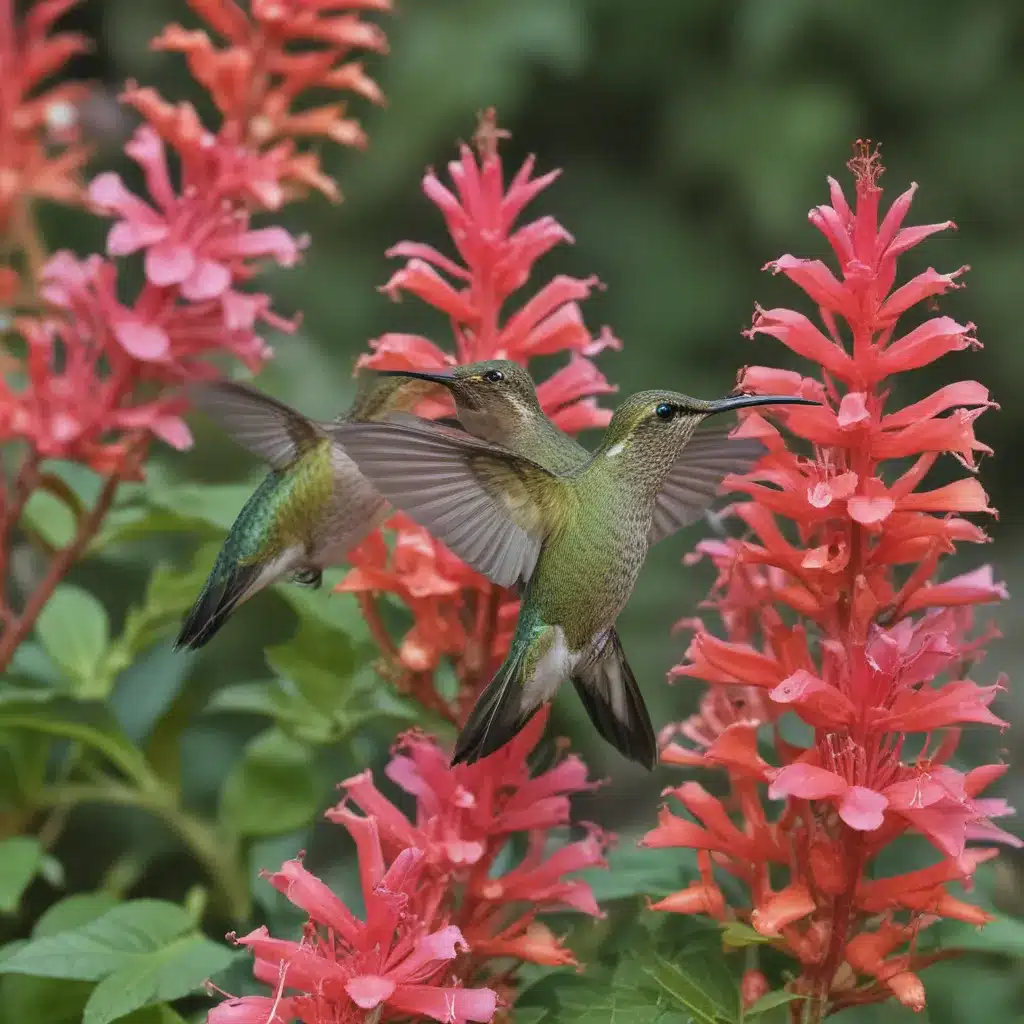
Chasing Nectar and Flutters of Joy
If you’re anything like me, few things in nature captivate the senses quite like the mesmerizing sight of a hummingbird in flight. These feisty, yet graceful creatures dart and hover, their iridescent feathers catching the light as they flit from bloom to bloom in search of their next nectar fix. As a landscape designer in Temecula, California, I’m always on the lookout for the perfect plants to attract these avian acrobats and bring a burst of energy to any outdoor space.
A Hummingbird’s Perspective
Imagine, if you will, stepping into the tiny shoes (or more accurately, the minuscule feet) of a hummingbird. The world suddenly appears larger-than-life, with flowers towering overhead like skyscrapers, their nectar-filled petals a veritable buffet waiting to be savored. These diminutive dynamos have to work hard to fuel their high-octane lifestyles, flapping their wings an astonishing 12-80 times per second to keep their svelte, energetic bodies airborne.
Their insatiable appetite for sweet nectar drives them to visit hundreds of flowers each day, zipping from blossom to blossom in a blur of activity. With a heart rate that can reach an astounding 1,260 beats per minute, hummingbirds need a constant supply of sustenance to maintain their frenetic pace. That’s where we, as gardeners and landscape designers, can step in and create the perfect oasis for these feathered friends.
Planting a Hummingbird Haven
When it comes to attracting hummingbirds, the key is to choose a variety of vibrant, nectar-rich plants that will keep these aerial acrobats coming back for more. Some of my personal favorites include:
| Plant | Attributes |
|---|---|
| Fuchsias | These hanging baskets or potted plants boast tube-shaped, pendulous flowers in a rainbow of colors, from deep purples to bright reds and oranges. Hummingbirds adore the nectar-rich blooms and will often hover in front of the flowers, sipping their fill. |
| Hoyas | Also known as “wax plants,” these gorgeous, trailing vines produce clusters of star-shaped flowers that are magnets for hummingbirds. The nectar-rich blooms come in a variety of colors, from pure white to deep pink, making them a stunning addition to any garden. |
| Trumpet Vines | With their vibrant, trumpet-shaped flowers in fiery shades of red, orange, and yellow, these vines are irresistible to hummingbirds. They provide a reliable source of nectar throughout the growing season, ensuring a constant stream of winged visitors to your garden. |
But the fun doesn’t stop there! Hummingbirds are also drawn to a host of other flowering plants, including:
- Petunias
- Lantana
- Salvia
- Begonias
- Geraniums
- Hibiscus
- Nasturtiums
By carefully selecting a mix of these nectar-rich blooms, you can create a veritable hummingbird hotspot in your own backyard, complete with a dazzling display of aerial acrobatics and a symphony of chirps and trills.
Nurturing Nectar and Nesting Spots
Of course, attracting hummingbirds is about more than just providing a steady supply of nectar. These diminutive dynamos also need sheltered spots for building their walnut-sized nests and raising their young. That’s why it’s important to incorporate a variety of evergreen and flowering shrubs, as well as small trees, into your landscape design.
Plants with lush foliage and dense branching patterns make ideal nesting sites, offering the perfect combination of protection and access to foraging opportunities. And by strategically placing these elements throughout your garden, you can ensure that your hummingbird guests have ample places to rest, refuel, and raise their families.
Embracing the Chaos
As a landscape designer, I’ve learned that when it comes to hummingbirds, you have to embrace the chaos. These feisty little creatures are the aerial acrobats of the avian world, zipping and darting through the garden in a dizzying display of speed and agility. But that’s all part of the charm, isn’t it?
So, the next time you find yourself captivated by the mesmerizing sight of a hummingbird hovering before a cluster of vibrant blooms, take a moment to appreciate the sheer wonder of these feathered wonders. By filling your garden with the plants they love, you’ll be rewarded with a constant source of entertainment and a splash of color that will delight the senses all season long.

