

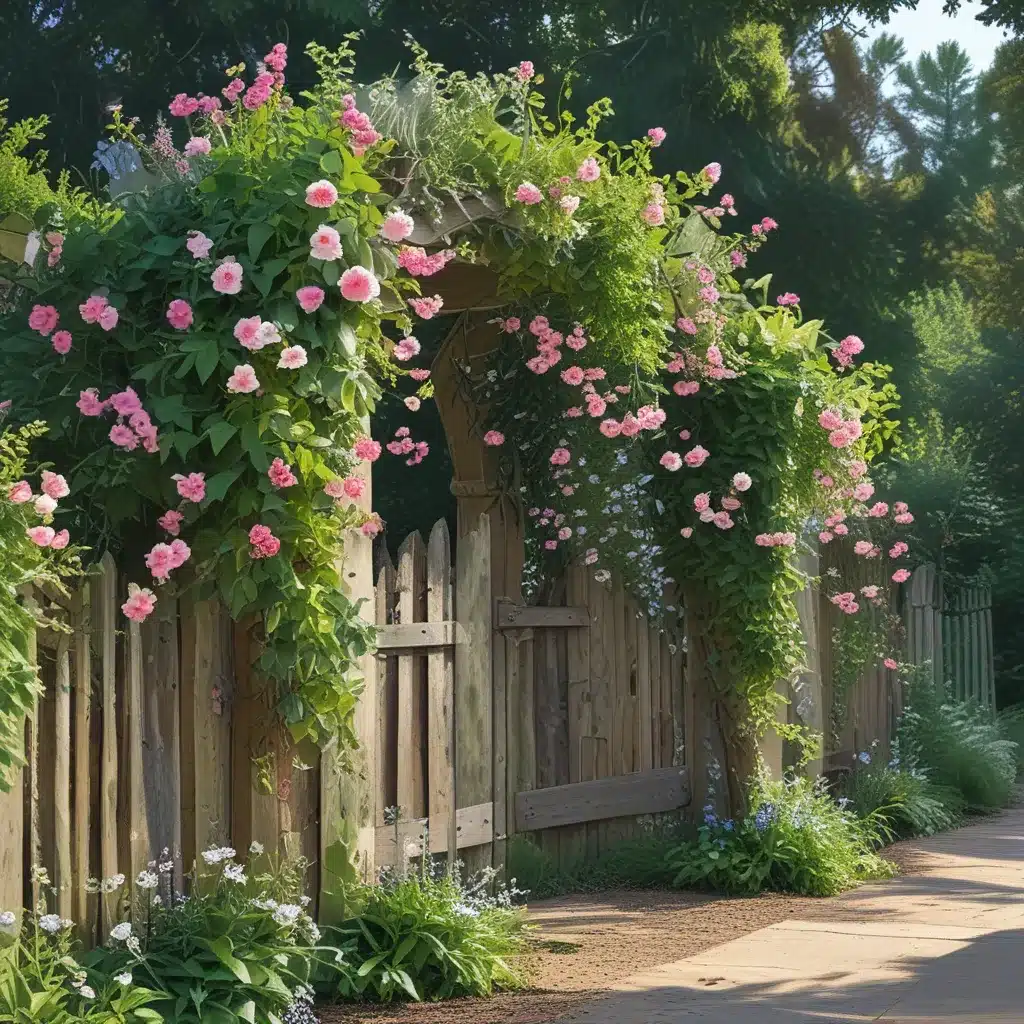
Climbing the Vertical Garden Frontier
At some point long ago, before I became a full-on gardener, I read an article that opened my eyes to the overlooked potential of vertical gardening. The article suggested that fences, walls, and the sides of structures were often bereft of greenery – an underutilized gardening space. And that idea stuck with me.
You see, I used to live in big cities where space was limited, so I was always on the lookout for ways to add more plants and greenery to my life. Now that I have a more spacious garden, that idea of vertical gardening comes up again and again as I search for solutions to privacy, hiding unsightly structures, and adding pops of color and texture to small spaces. After all, nature gardens vertically all the time, with plants that hang, nestle, and climb.
Learning from the English Masters
In my quest for vertical gardening inspiration, I’ve discovered that the English have a long-standing love affair with climbing and vining plants. Wisteria, roses, and ivy adorn the arbors, walls, and cottages of English estates and manors, demonstrating the beauty and functionality that vines can bring to a garden.
From the English gardeners, I’ve learned valuable lessons – the difference between a climbing and a rambling rose, how to properly prune a wisteria, and the importance of adding wire structures to support climbing plants. They’ve shown me that with the right support, vines can transform even the most mundane vertical surfaces into verdant, vibrant displays.
Vines Galore in My Own Garden
Inspired by the English, I’ve been slowly but surely covering the fences, arbors, and other vertical structures in my own garden with an ever-growing collection of vines. Some use nearby evergreen plants as support, adding pops of color to otherwise green backdrops. Others are paired together, their blooms alternating throughout the seasons to ensure year-round interest.
One of my current favorites is the Clematis Guernsey Cream – new to my garden this year from the HPSO Spring plant sale. Its large, gorgeous white flowers will echo the variegation on nearby plants, creating a stunning visual harmony.
Just up the path, our Wisteria Frutescens Amethyst Falls (American Wisteria) climbs up the branch of an old apple tree and onto the arbor above the gate. Unlike its voracious Asian cousins, this variety grows to about a third the size and flowers reliably after just five years in the ground. The sight of its delicate purple blooms backlit by the sun is truly breathtaking.
Scents and Sights Along the Garden Path
As I stroll down the path into the back garden, I’m greeted by the intoxicating fragrance of Trachelospermum Jasminoides (Confederate Jasmine) trained against the fence. I’ve attached a system of wires to support its growth, and over time, it will fill in the spaces, creating a lush green wall.
In the back corner, the Trachelospermum Jasminoides Variegatum (Variegated Confederate Jasmine) and Jasminum Polyanthum (Chinese Jasmine) duke it out on a trellis, drawing the eye upwards towards our neighbor’s beautiful magnolia tree.
Clematis Galore
As you can probably tell, I have a thing for clematis. They’re such well-behaved, easy-care vines, and you can find varieties that bloom at almost any time of year. In the northeast corner of the back garden, a magenta clematis (whose exact variety escapes me) climbs a trellis attached to the fence, its flowers complementing the orange Alstroemeria nearby.
In the opposite corner, another unnamed clematis fan-shapes itself across a trellis, and under the back deck, Clematis Early Sensation twines along wires, bursting into bloom in early spring. And on the deck, the Clematis Alpina Willy greets us with its cheerful flowers as we step outside.
Seeking Balance and Beauty
Of course, I don’t just rely on clematis – I have a whole menagerie of vines in my garden. A Lonicera x heckrottii Goldflame (Goldflame Honeysuckle) climbs a trellis at the end of the deck, and Billardiera longiflora (Blueberry Vine) wraps around the arbor, complementing the Clematis Rooguchi and Clematis Cirrhosa Wisley Cream that also call it home.
Even my annual vines, like the beautifully scented Sweet Pea, get in on the action, climbing up a wire mesh in a vegetable stock tank.
As I look at the varied tapestry of vines in my garden, I’m struck by the balance and beauty they bring. They add color, texture, and fragrance, while also serving practical purposes like privacy, hiding unsightly structures, and even attracting hummingbirds. And with so many different varieties to choose from, the possibilities for vertical gardening are truly endless.
The Vertical Gardening Journey Continues
Though I’ve managed to cover a good portion of my garden’s vertical surfaces with these lovely flowering vines, there’s always more room to grow. I’m constantly on the lookout for new and interesting vine varieties to tuck into any available nooks and crannies.
After all, as the team at A-1 Landscape Construction in Temecula, California knows, vertical gardening is an ever-evolving art form. And I, for one, am excited to continue exploring the endless possibilities that vines have to offer. Who knows what delightful surprises might be in store as I climb the vertical gardening frontier?

