

The Lawn Mower Conundrum
I’ll never forget the day I decided to tackle my overgrown yard. As I stood there, surveying the sea of knee-high grass, I knew I had to take action. But when I went to my garage to grab my trusty old lawn mower, I was met with a heart-sinking realization – it was on its last legs. Now I had a decision to make: what type of lawn mower should I get to tame this wild jungle I call a yard?
Lawn mowers come in all shapes and sizes, each with their own unique features and capabilities. It can be downright intimidating trying to figure out which one is right for your property. Do you need a ride-on mower? A self-propelled push mower? One that mulches, bags, or side-discharges the clippings? The options are endless!
Lucky for you, I’ve done the research so you don’t have to. In this comprehensive guide, I’ll walk you through everything you need to know to choose the perfect lawn mower for your yard. Get ready to say goodbye to that shaggy, unkempt look and hello to a lush, manicured lawn!
Determining Your Lawn Size
The first step in picking the right lawn mower is to assess the size of your yard. After all, you wouldn’t try to mow an acre of land with a dinky little push mower, would you? That would be like trying to tame a lion with a feather duster – it just ain’t gonna work.
To get a rough estimate of your lawn’s square footage, simply walk off large rectangles and add up the areas. For example, if your yard is made up of a 50 x 30 foot rectangle and a 40 x 20 foot rectangle, your total square footage would be 2,400 square feet (50 x 30 + 40 x 20 = 2,400).
An average man’s stride is about 30 inches, while a woman’s is around 26 inches. Or, if you want to be really precise, you can measure your own stride. Just be sure to account for any irregularly shaped areas or obstacles that might impact your mowing.
Once you have a rough estimate of your lawn’s size, you can start narrowing down your mower options. Here’s a general guideline:
- Lawns under 1/4 acre (10,890 square feet): Push mower
- 1/4 to 2 acres: Rear-engine riding mower, light-duty lawn tractor, or residential zero-turn mower
- More than 2 acres: Commercial-duty zero-turn mower
Of course, these are just approximations. Your specific needs, budget, and personal preferences will also play a role in your final decision. But this should give you a good starting point.
Push Mowers: The Workhorse of Lawn Care
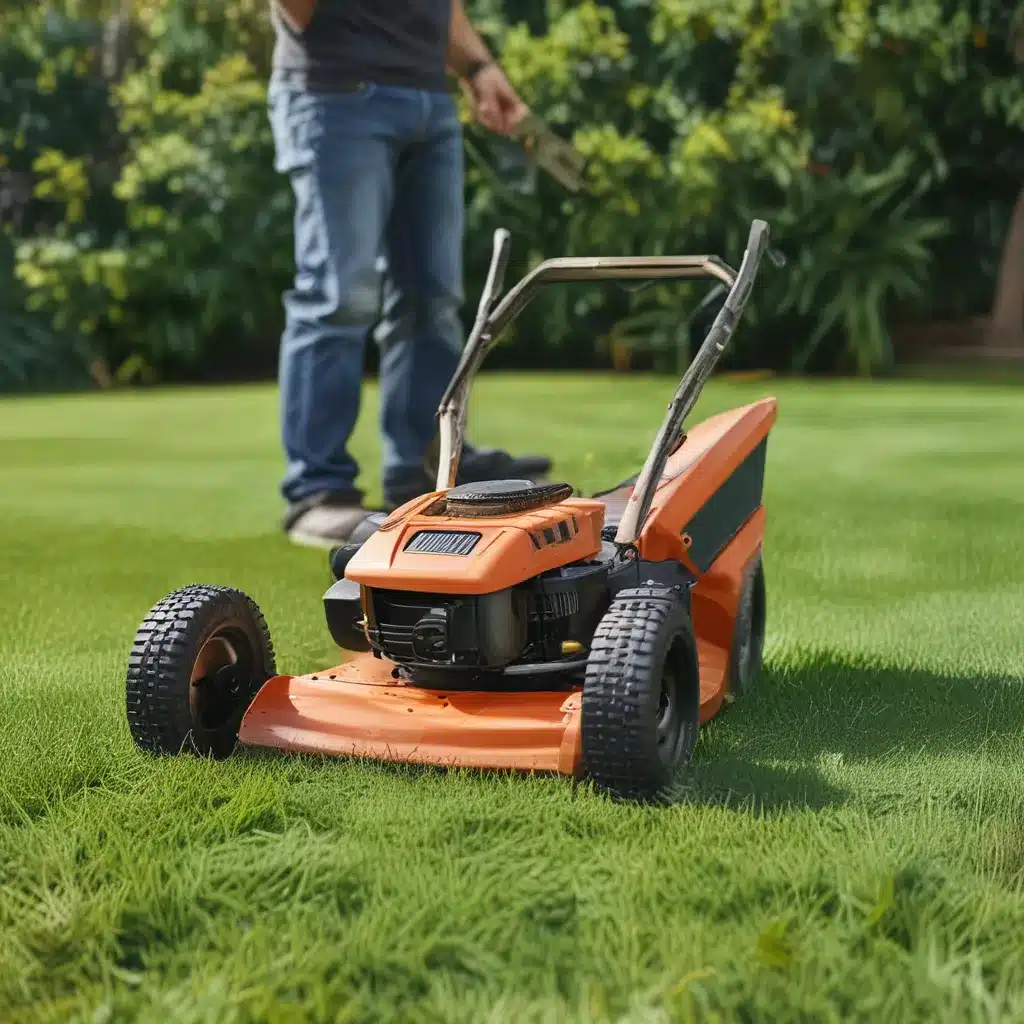
If your yard falls on the smaller side, a trusty push mower is likely your best bet. These workhorses come in a variety of configurations, each with their own unique benefits.
First, you’ll need to decide between a gas-powered or electric model. Gas mowers tend to have more power and runtime, making them a better choice for larger or more overgrown yards. But electric mowers are becoming increasingly popular for their eco-friendly appeal and quiet operation.
Next, consider the drive system. Push mowers can be self-propelled, front-wheel drive, or rear-wheel drive. Self-propelled models make mowing a breeze, especially when tackling hills or hauling around a full grass bag. Front-wheel drive is best for flat terrain with lots of obstacles, while rear-wheel drive shines on inclines and side slopes.
And let’s not forget about the all-important cutting and discharge features. Some push mowers simply discharge the clippings to the side, while others offer mulching or bagging capabilities. Mulching is great for a healthy lawn, as it returns nutrient-rich grass clippings to the soil. But bagging can be helpful if your lawn is getting a bit shaggy.
Ultimately, the right push mower for you will depend on the unique characteristics of your yard and your personal preferences. But no matter which model you choose, you can rest assured that a good quality push mower will have your lawn looking its best in no time.
Riding Mowers: The Need for Speed (and Comfort)
If you’ve got a larger property – say, anything over a quarter acre – a riding mower is probably the way to go. These bad boys come in a few different flavors, each with their own strengths and weaknesses.
First up, we’ve got the classic lawn tractor. These familiar-looking mowers have a front-mounted engine and a steering wheel, just like a car. They’re a great option for homeowners with medium-sized yards, with deck sizes ranging from 42 to 54 inches. And with engine power ranging from 18 to 25 horsepower, they’ve got the oomph to tackle even the toughest grass.
For an even more powerful and nimble option, consider a zero-turn mower. These bad boys are all about speed and maneuverability, with dual hydrostatic transmissions that allow you to turn on a dime. Deck sizes can range from 32 to 60 inches, and engine power can top out at a whopping 25 horsepower. Just be prepared to shell out a bit more – zero-turns are definitely the Ferrari of the lawn mower world.
And let’s not forget the rear-engine riding mower, the middle child of the riding mower family. These compact machines pack a punch, with single-cylinder engines ranging from 344 to 382cc and deck sizes from 30 to 33 inches. They’re a great compromise for folks with yards too big for a push mower but too small for a full-size lawn tractor.
Regardless of which riding mower you choose, you can expect a more comfortable and efficient mowing experience. No more pushing and sweating – just sit back, relax, and let the mower do the hard work. And with wider decks and more powerful engines, you’ll be able to zip around your property in record time.
The Mower Features That Matter Most
Okay, so you’ve got a handle on your lawn size and the general mower types. But the features don’t stop there! There are a whole host of other bells and whistles to consider when choosing your perfect lawn companion.
One of the biggest factors is the transmission. Walk-behind mowers typically use belt-and-pulley systems or hydrostatic transmissions, while riding mowers often feature hydrostatic or continuously variable (CVT) transmissions. Hydrostatic is the smoothest and most reliable, but also the most expensive.
Engine size is another biggie. Larger engines (think 140cc to 190cc) provide more torque and are less likely to stall in tall grass. They also help power self-propelled mowers up hills with ease.
And speaking of hills, the wheel size and type can make a big difference in your mowing experience. Larger rear wheels with ball bearings will navigate rough terrain much better than smaller bushing-type wheels. Trust me, you don’t want to be fighting your mower every time you hit a rut or incline.
Other handy features to look for include blade-brake clutches (to pause mowing without stalling the engine), “just check and add” no-change oil systems, and wide-cut decks for faster mowing. And if you really want to impress the neighbors, there are even electric mowers and models with power-assisted reverse!
The moral of the story? Don’t just focus on the big stuff like engine power and deck size. Pay attention to all the little details, too – they can make a world of difference in your overall mowing experience.
Putting it All Together
Alright, so you’ve got the lowdown on lawn sizes, mower types, and all the key features to consider. Now it’s time to put it all together and find your perfect match.
First, take a good hard look at your yard. How big is it? What kind of terrain are you working with? Do you have any unique landscaping features that might impact your mowing needs? Jot down all the details so you can refer back to them.
Next, make a list of your must-have features. Are you dead set on a self-propelled model? Do you need a mower that mulches, bags, and side-discharges? Would an electric mower be a better fit for your eco-conscious lifestyle? Prioritize the features that are most important to you.
Once you’ve got a clear picture of your lawn and your needs, it’s time to start researching specific mower models. Check out the selection at your local lawn and garden retailer, read online reviews, and compare features and prices. Don’t be afraid to test a few out in person – getting a feel for the mower’s handling and controls is crucial.
And remember, your lawn mower is an investment in the long-term health and appearance of your yard. Don’t just go for the cheapest option – focus on quality and durability. After all, a well-maintained lawn mower can last for years, keeping your grass looking its absolute best.
So what are you waiting for? It’s time to bid farewell to that shaggy, overgrown lawn and hello to a lush, manicured oasis. With the perfect lawn mower by your side, you’ll be the envy of the entire neighborhood in no time.

