

The Joy of Plant Shopping (Or Not?)
Do you love shopping for plants as much as I do? I often find myself tempted to buy more plants than I have space for. Sometimes, I’ve come home with a plant I bought on impulse, unable to resist its lovely flowers. But what if I told you there are potential pitfalls to avoid when shopping at the nursery?
It may surprise you to find out that unhealthy plants, not allowing enough room in the garden, and buying plants ill-suited to your area can lead to buyer’s remorse and an empty wallet. Before you head out to the nursery to add plants to your garden, I invite you to learn some helpful tips to make it a rewarding visit. From recognizing the signs of unhealthy plants to why smaller may be better and why it’s better to pass over a plant in full bloom for one that isn’t, I promise that following even one of these tips will save you from expensive mistakes.
My ten favorite tips for plant buying are included in my article on Houzz.com. I hope you find it helpful in planning a beautiful garden and saving money.
Landscape No-Nos: A Cautionary Tale
Have you ever driven past a landscape that had some problems with it? As a horticulturist and landscape consultant, my attention diverts whenever I see “Landscape No-Nos” like the one I’m about to share with you.
A while ago, I shared a photo of a landscape on my Facebook page and invited people to identify three things wrong with it. I received a lot of comments, including “looks like Versailles by the inept” and “shrubs arranged like funny-looking ottomans spread across gravel.” It’s essential to clarify that the purpose of showcasing landscapes like this isn’t to shame homeowners. Instead, our goal is to help you identify common problems and provide straightforward solutions to correct or prevent them in your landscaping projects.
Using this landscape as an example, let’s look at the problems and later focus on how to solve them. It’s obvious that there are too many plants in this area, and the mature size of the shrubs wasn’t factored into the original design. The types of flowering shrubs in this area – desert ruellia (Ruellia peninsularis), Baja fairy duster (Calliandra californica), and Green Cloud sage (Leucophyllum frutescens ‘Green Cloud’) – are good choices. They are clearly spaced too closely together due to poor pruning.
As you can see, there is a tree, a couple of succulents (prickly pear cactus and yucca), and a lot of shrubs. While there is a variety of plants in the landscape, there’s an overabundance of shrubs compared to other types. The landscape lacks a balanced mix of different plant types, resulting in an imbalance that affects its overall aesthetics.
These lovely flowering shrubs are contorted into anonymous green blobs. They lack in beauty and character, and you would have to look closely to be able to identify what each shrub is. The problem is what is missing from this landscape – primarily attractive shrubs that grow into their natural shapes covered in colorful flowers. Other problems associated with maintaining flowering shrubs this way are that it is stressful for the plant, shortens their lifespan, causes them to use more water to regrow their leaves, and creates more maintenance.
Now that we have identified the problems, we can look at the solutions. I will use the landscape above as my example.
Transforming the Landscape: From Blobs to Beauties
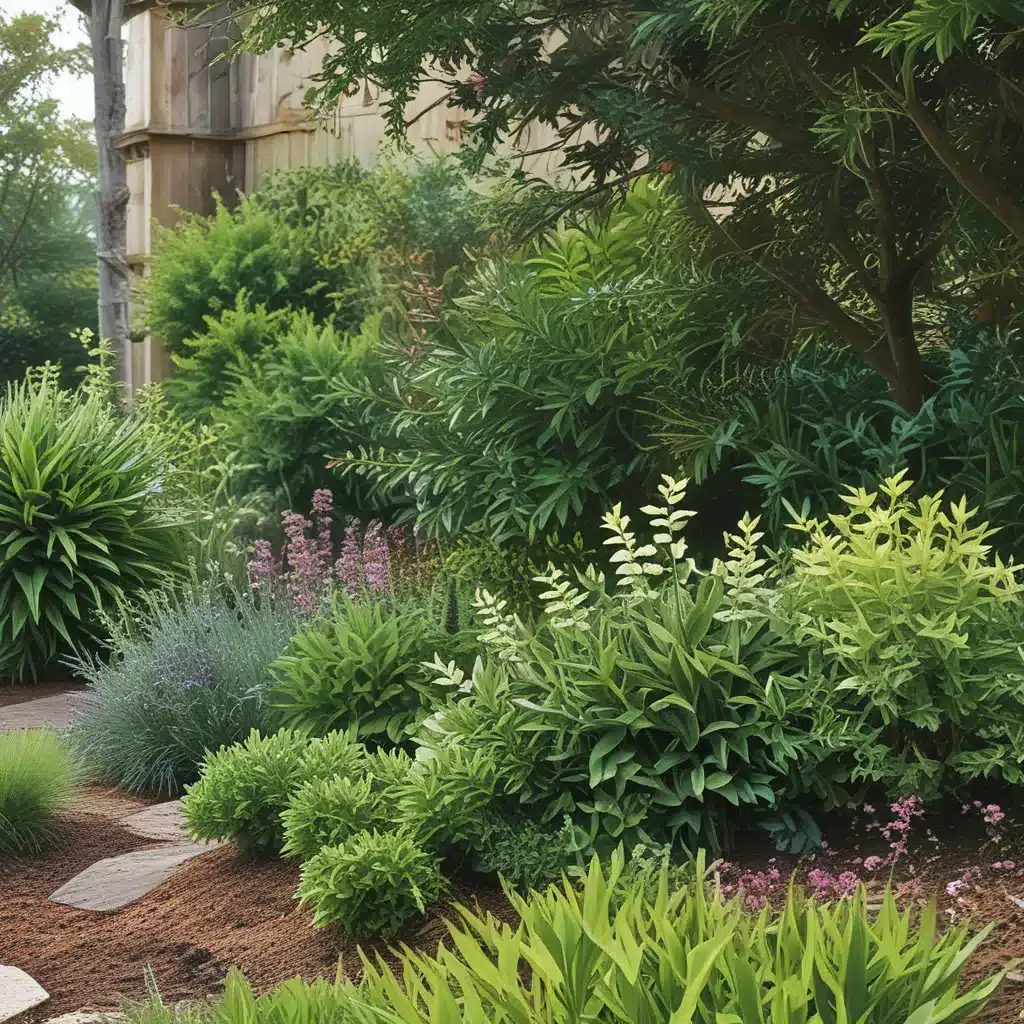
Here is a snapshot of a landscape area at the Desert Botanical Garden where plants have room to grow. They grow into their natural shape and form. Transforming the problematic landscape shown earlier and others like it aren’t difficult, and the results are dramatic. What a beautiful landscape filled with healthy plants that use less water and need little maintenance!
Are you tired of shapeless shrubs that look like green blobs? I invite you to learn more about how to prune the right way by attending my online Shrub Pruning Workshop.
A Stroll Through a Flowering Winter’s Garden
For my longtime followers who are desert gardeners, you may have noticed that I haven’t been blogging as regularly as before. Well, I am excited to tell you the reason why. But first, a little background.
I help desert gardeners in my work as a landscape consultant, where I meet with my clients and give them the knowledge and tools they need to create, grow, and maintain a beautiful outdoor space that thrives in a hot, dry climate. Many of you know that gardening in the desert can be challenging, and it is hard to find resources to help you learn the right way to do things.
As a result, my phone was ringing off the hook with people who needed my help. Unfortunately, there aren’t enough hours in the day to help everyone, and I soon became overwhelmed with work and exhausted. So, I began looking for a way that I could reach more people to give them the help they needed.
All winter long, I worked hard on my new project and debuted it in January to a limited number of desert gardeners. I hoped that they would give me feedback so I could make sure that my new project was what they needed. What I wasn’t prepared for was their overwhelmingly positive response. I can’t tell you how much that meant to me. I achieved my goal of reaching more people and helping them on their desert garden journey, and it is working.
And now, I’m finally ready to draw back the curtains and share it with you. Desert Gardening 101 is a way that you can learn how to create, grow, and maintain a beautiful garden that thrives in the desert. I’ve combined my 20 years as a horticulturist, certified arborist, and landscape consultant into this class.
Here’s what some of my students have to say about the course:
“This class has been very informative. We recently moved into a home in AZ with no landscaping in both the front and back yards. Having no experience in desert gardening and spending a lot of time online researching this subject, I came across the AZ Plant Lady and was happy to see there was an upcoming class on Desert Gardening. We signed up immediately. This class is very helpful, and I’m sure it will keep us from making expensive mistakes in our new landscape and saving many hours of research. We can’t wait to start planting. Thank you for sharing your knowledge.” – Laurie Wolf
“I have really enjoyed Desert Gardening 101 and have learned so much. Talk about a learning curve! Everything about gardening here is a complete 180. Yikes, I have killed more plants in the past three years that I ever did in the many many years I gardened in Milwaukee. I wish that I would have had the opportunity to learn all that I am learning now before we hired a landscape firm to landscape our yard. We had a clean slate – a brand new construction with nothing but dirt surrounding our home. I knew very little about the desert, the plants and trees that grow best here, and how to plant and care for them, soil to use, the watering issue, let alone design. We are now in the process of fixing the problems, thanks in large part to the knowledge I am gaining through Desert Gardening 101. I still have a ton to learn, but I’m making lots of progress with the weekly modules. Thanks, Noelle, for making this a very informative and worthwhile course for all of us trying to learn the ins and outs of desert gardening.” – Barb Terschan
“A Phoenix resident for many years, I recently moved from downtown to a house on the mountain preserve and wanted to flow into the desert with native and low water desert plants. That is when I found AZ Plant Lady and started learning. This class has been a huge help in this transition. I have learned I’ve been planting my new plants too deeply and watering way too much. The pruning session was an eye-opener also. Now I know when and how to prune my shrubs. The many plant suggestions provided have narrowed my search when visiting nurseries and has kept my focus on what really thrives in the desert. I am gardening with more confidence thanks to this course. Highly recommend.” – Linda Yowell
Desert Gardening 101 is an online course that teaches proven landscape strategies that I use myself, and I’ve taught hundreds of my clients who have gone on to succeed in their own landscape goals. This is a self-study course, and you can access it anytime online and view the content at your convenience. Most importantly, you will have lifetime access to the course, so you revisit the classes at any time in the future.
I would be honored to come alongside you on your garden journey. Click here for more information and to register. This is by far the most affordable way to work with me at a fraction of the price of my private consultations.
Reviving Desert Landscapes: From Drab to Fab
Yes, please! Have you ever renovated the interior of your house? Seeing the old, outdated elements peeled away and replaced with new paint, flooring, etc., can leave you feeling refreshed and even excited. Well, I get to do that with outdoor spaces, assisting clients with already-established desert landscapes to create an updated look.
The key to this is NOT to tear everything out and begin from scratch. Deciding what should stay and what we should remove and replace is a delightful puzzle. There is immense satisfaction from assisting people in crafting an appealing desert landscape, especially when I have the opportunity to revisit the site several months later to witness the plants’ growth. I recently had the chance to return to a desert landscape I designed precisely one year after its completion, and I was thoroughly pleased with the outcomes.
Let me show you the transformation.
The front yard consisted of two palm tree stumps, a few agave, overgrown gold lantana, and boulders. The landscape rock was thinning and mixed in with the river rock. Unfortunately, the asphalt from the street was crumbling away. I identified the parts of the landscape that I could reuse, including the boulders and the gold lantana, and removed everything else.
To establish the framework for the new desert landscape elements, we added extra boulders. We improved the existing contouring by raising the height of the mound and creating a swale in the front center. The circular collection of rip-rap rock serves to mask the opening of the end of a French drain, which helps to channel water from the patio.
We placed a saguaro cactus and a totem pole Monstrose (Lophocereus schottii ‘Monstrose’) to create vertical interest. Next, we pruned the existing gold lantana severely to rejuvenate them and added others to establish visual continuity. We incorporated other succulents like artichoke agave (Agave parryi var. truncata) and gopher plant (Euphorbia biglandulosa) to introduce texture through their unique shapes.
Removing the existing river rock, we then washed it off and replaced it, along with fixing the crumbling edge of the street. This helped the landscape blend seamlessly with the natural curves of the desert.
Anchoring the corners with a grouping of plants is a very simple way to enhance the curb appeal of a home. This collection of volunteer agave and old palm tree stumps wasn’t doing this area any favors. We elevated this corner slightly, forming a gentle rise in elevation. We added a large boulder to the existing one and transplanted a beautiful specimen artichoke agave from the owner’s previous residence to this spot. Angelita daisies (Tetraneuris acaulis) will provide year-round color as they fill in, and we planted Blue Elf aloes to introduce a delightful splash of color.
Entering the front courtyard, you’ll notice the corner occupied by an overgrown rosemary shrub. We removed the dwarf oleander shrubs because they were too large for the smaller scale of this area. Mexican fence post cactus (Pachycereus marginatus) helps to anchor the corner and will grow at a moderate rate, adding more height as it grows. We can guarantee year-round color with angelita daisies and Blue Elf aloe. These plants won’t outgrow this area.
Moving toward the front entry, this area is somewhat underwhelming. The natal plum (Carissa macrocarpa) adds a pleasant green backdrop, and it is thriving in the shade. The Dasylirion succulent should never have been planted here – it needs full sun to look its best. The solution in this area is quite simple. Pruning back the natal plum to a more attractive shape makes them an asset. A lady’s slipper (Pedilanthus macrocarpus) adds height and texture contrast and will grow in the bright shade. We kept the trailing purple lantana (Lantana montevidensis) for the color that it provides, and rip-rap rock is placed to add some interest at the ground level.
In the backyard, another old rosemary shrub was removed from the corner. It is replaced with Blue Elf aloe and angelita daisy, repeating the same planting from the corner area in the courtyard, helping to tie these separate areas together. Aloe vera (Aloe barbadensis) is along the shady side of the house, where their spiky shape creates interesting shapes. The key to keeping them attractive is to remove new growth around the base as it occurs.
The corner of the backyard is a very high-profile spot and faces the golf course. The homeowners wanted to get rid of the dwarf oleander hedge to improve their view. Clumps of agave look slightly unkempt, so we removed one of the clumps. This opened up this area and allowed us to add two aloe vera, which will decorate this corner with yellow blooms in winter and spring. The existing gold lantana provides beautiful color spring through fall.
The centerpiece of this group of plants is the water feature. It’s been over 20 years that I’ve been working on landscapes. Watching the transformation is a joy. I love being a part of it and combining the old with the new for a seamless design.
Thank you for allowing me to share this particular project with you. If you’re looking for inspiration for low-maintenance desert landscapes, I have more to share in the next section.
Using Plants as Natural Curtains
Do you have windows that face outward toward a view that you would rather not see? Perhaps it is the view of the house next door. Or you have a bare wall. Maybe you need some protection from the sun. To solve these problems, have you ever considered using plants in place of curtains?
In my garden, I have east-facing windows that heat the house early in the day. When our home was being built, I designed the landscape so that there were plants placed in front of those windows. Why would I put plants in front of these windows, you may wonder? I needed some sort of shelter from the sun, but I didn’t want curtains that would block my view of the garden, so I chose to add Mexican bird-of-paradise. This yellow-flowering shrub can be pruned into a small tree, which is what I have done, allowing me to still view the garden beyond while providing some protection from the sun’s rays.
A few years ago, I was working with a client who was an interior designer. She had employed this same strategy for adding beauty while shielding her windows from the sun. She had decided that instead of curtains for her windows, she wanted natural green window coverings. You can see the lush green foliage from the Orange Jubilee (Tecoma x ‘Orange Jubilee’) creates interesting shadows inside, and she can enjoy the feeling of being surrounded by beautiful plants even while indoors.
To achieve this, she planted a row of Orange Jubilee shrubs in front of her windows. Here’s another example of using plants instead of curtains: A single hop bush (Dodonaea viscosa) shrub creates a lovely green screen that protects this west-facing window from the blistering afternoon sun.
Beyond functioning as a curtain, these plants also work to increase shade and reduce heat islands in neighborhoods, helping to keep homes cooler. I’m a firm believer in the power of using plants to enhance our living spaces, both inside and out.
Design Notes from the Field
I’m back with design notes from the field, where I share observations and recommendations from my work as a landscape consultant. This edition features a new build, metal art, weeds, and shade. I hope that you can pick out helpful tips that you can use in your landscape.
Up first is a new house that is being constructed in east-central Phoenix. The home that used to stand on this lot was taken down to the foundation, and an energy-efficient home is coming up in its place. I was hired by the architect to design a landscape that will fit its clean, modern lines.
Several years ago, I solely worked as a landscape designer. I worked with homebuilders, creating new landscapes from scratch with a blank palette. Nowadays, as a landscape consultant, design is just one aspect of what I do. I have an overall plan within an existing landscape, which also includes maintenance recommendations. Now and then, I create one for new homes, and this one has some fun challenges.
The look the architect wants is simple and uncluttered. This gives the new homeowner room to add to it if desired. So, I am concentrating on using plants to create a framework. This includes two trees in the front. Then, there will be two along the west-facing side to provide screening from the road and protection from afternoon sun. Foundation plants will soften the base of the house, while taller shrubs will soften the corners. Ground covers will add low-level interest along with a

