

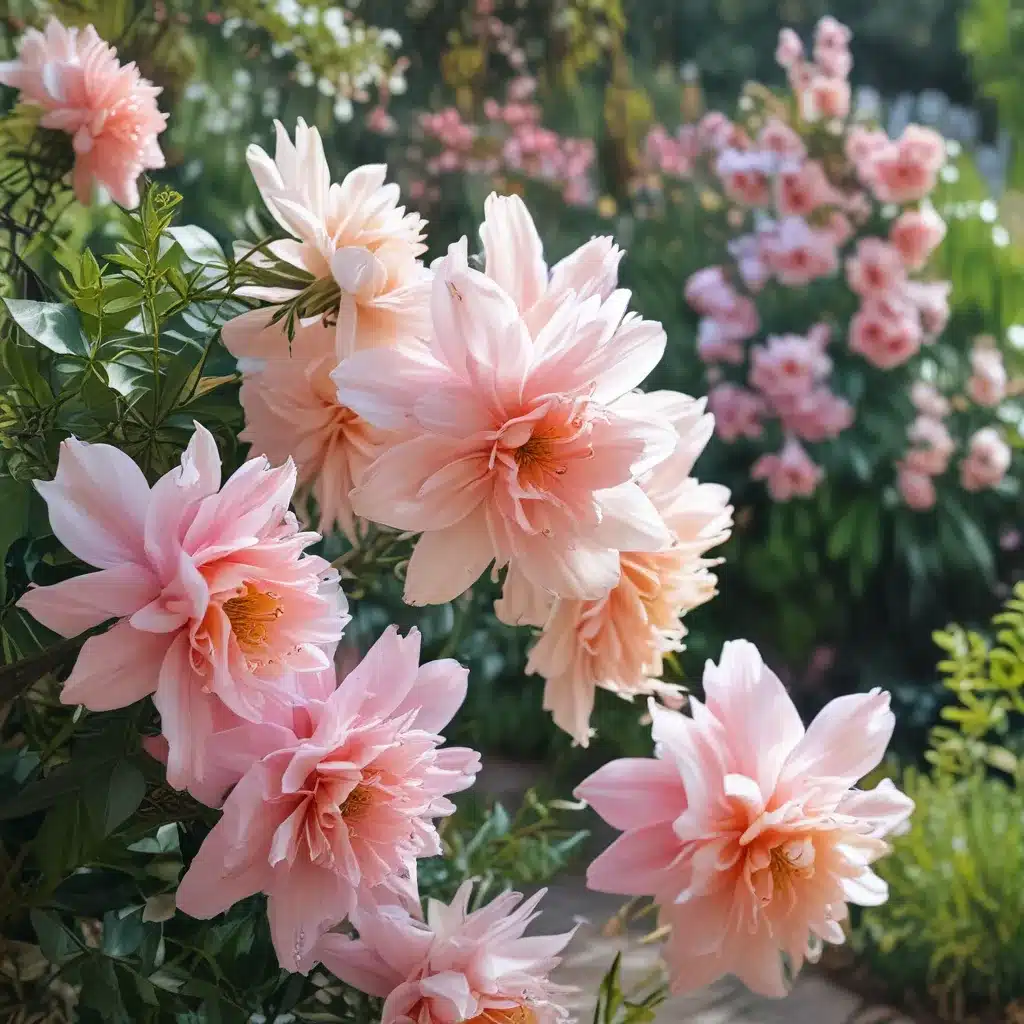
Unearthing the Scents of Yesteryear
As I sat poring over the packets of heirloom seeds I had just received, I couldn’t help but feel a rush of nostalgic giddiness. You see, I’ve made it my mission this year to recreate an old-fashioned flower bed, just like the ones I remember from my childhood. Not an easy task, considering how hard it is to find those elusive heirloom varieties these days. But after scouring online catalogs for weeks, I finally managed to narrow down my list to a carefully curated selection of ten fragrant bloomers.
As I mentioned last week, I am determined to recreate an heirloom flower bed. Not finding heirloom seeds in stores here, I spent much of the past week browsing through and making lists of potential purchases from online heirloom seed company catalogs. Although my initial sheet had over thirty varieties on it, I was able to rein myself in and set a limit at ten packets of seeds.
Just a few days after ordering, my seeds arrived. As I poured over them, reading the back of the packets and drinking in the pictures, I realized something revealing – I didn’t remember what half of them looked like. I had ordered them because I remembered how sweet they smelled. Of our five physical senses, the sense of smell evokes more memories than any of the others. An unexpected drift of a long-forgotten scent can carry us back to times and places that we thought we had left behind. For me, the perfumes of the garden bring back cherished remembrances, especially of times I spent in my mother’s and grandmother’s backyard flower gardens.
The Olfactory Wisdom of the Ancients
Garden fragrance, though, is not just for humans to enjoy. Research shows that flower scent has a critical function in the insect world. Flower scent is tied to pollination – certain scents tend to be paired with particular pollinator types. According to Natalia Dudareva, an associate professor in the department of horticulture and landscape architecture at Purdue University, “Species pollinated by bees and flies have sweet scents, whereas those pollinated by beetles have strong musty, spicy or fruity odors.” Pollinators can recognize their preferred scents at distances over a mile away, leading them directly to their specific food sources.
The timing of a flower’s maximum fragrance is also related to the species of pollinators that visit it. Those plants that release their fragrances during the day are pollinated by bees and butterflies, while those that are night bloomers are pollinated by moths and bats. The strength of a flower’s scent is directly related to its readiness to be pollinated as well. Blooms that are newly opened are not as ready to be pollinated and are not as fragrant as older ones. Blossoms that have been sufficiently pollinated are also not as fragrant and are less attractive to pollinators, which will typically move on to more efficient food sources.
Regardless of your interest in fragrance – whether it’s pure joy or pure science – the innate wisdom of my ancestors amazes me. Without ever studying pollination science or techniques of design for fragrance, my mother, my grandmother, and probably all of my community’s elders knew how to create a garden of beauty that aligned well with nature. Heirloom beds in my community certainly weren’t the huge cottage-type borders that are often featured in today’s glossy magazine pages. Instead, they were often narrow, simple beds carved out of spaces that laid next to the kitchen door, lined sidewalks, hugged the neighbors’ fences, rested along the garage, and defined the space where a favorite resting chair sat. They were all placed in spaces we passed by often in our daily tasks.
Designing for the Senses
These heirloom beds weren’t pristine, perfectly mulched affairs to control weeds either. In fact, what open ground did exist was lovingly hand-weeded in passing. I can remember following my grandmother through her garden and listening to her talk to her plants – in Slovak, so I never knew exactly what she said to them. Based on my own conversations with my plants now, I wonder what she told them.
Not surprisingly, their ideas still work well today and are worth considering. Choose your planting spaces carefully. Make your garden part of your everyday life by planting them in places where they will be viewed easily and visited daily. Spending even a few minutes in nature every day improves your mental and physical health.
Place your beds in a warm, sheltered area, such as next to a fence or a building. The warmth will allow the fragrances to build, and protection from the wind will keep the scents from being dissipated. Keep in mind that several of the fragrant flowers are night bloomers. Place those near windows, patios, and entryways that are likely to be frequented in the evening.
Position your beds so that they are easily managed. Several of the fragrant plants must be touched in order to release the essential oils that contain their scent. Some of the creeping thymes, for example, form a mat that releases its scent when walked on. Use them to line pavers and stepping stones.
Of course, modern hybrids in various colors are usually shorter and may have fragrance as well. But for that true, old-fashioned charm, I’ll be sticking with my heirloom selections. I can’t wait to see how they transform my outdoor spaces into a veritable perfume garden, just like the ones I remember from my childhood. Who knows, maybe I’ll even pick up a few gardening tips from my grandmother along the way.
Fragrance for Every Hour
As the sun dips below the horizon, a new world of fragrance awakens in the garden. Evening is one of my favorite times to enjoy the garden. The hot day of weed pulling and harvesting has come to an end, and I can stroll through the garden with a cool beverage. The softer light often shows aspects of plants previously overlooked, and many have adapted to the pollinators that come out to feed at this time.
One of my all-time favorite night bloomers is the Moonflower Vine (Impomea). Provide the plants with a sturdy trellis, and they can easily reach up to 20 feet. Moonflower was discovered in the jungles of India during WWII, and it thrives where summers are hot. I usually wait to start the seeds until the weather has really warmed up, as they’ll just sit and sulk in cool spring temperatures. But once the days begin to shorten again, the flower buds will appear. If you time it right, you can literally watch the flowers unfurl. Hummingbird Moths and Luna Moths will flock to the large, 4-5 inch pure white blooms. The flowers will fade by morning, but may linger in cooler or overcast weather.
Another captivating night bloomer is the Night Blooming Daylily (Hermocallis citrina). Yes, this is an actual daylily! While the buds are closed, the tips of each are stained with a purple-brown spot. The narrow flowers open in early evening and remain open until late the next morning. The lemon yellow sepals have streaks of green and are very fragrant.
And let’s not forget the ever-popular Flowering Tobacco (Nicotiana). I grow several varieties here at my garden. The star-shaped flowers in pinks, reds, and whites add a different feel to annual planting schemes. But my favorite is Nicotiana alata, which grows a little taller at around 2 feet. The graceful flower stalks rise above perennials and make this a great “weaver” in established beds. The flowers open at dusk and fill the air with a wonderful perfume in shades of pink, white, and purple.
Whether you’re drawn to the pure joy of fragrance or the fascinating science behind it, there’s no denying the power of scent in the garden. From dawn to dusk, fragrant bloomers can transform your outdoor spaces into a veritable perfume wonderland. So why not add a little extra enchantment to your Temecula landscape with some of these fragrant favorites?

