

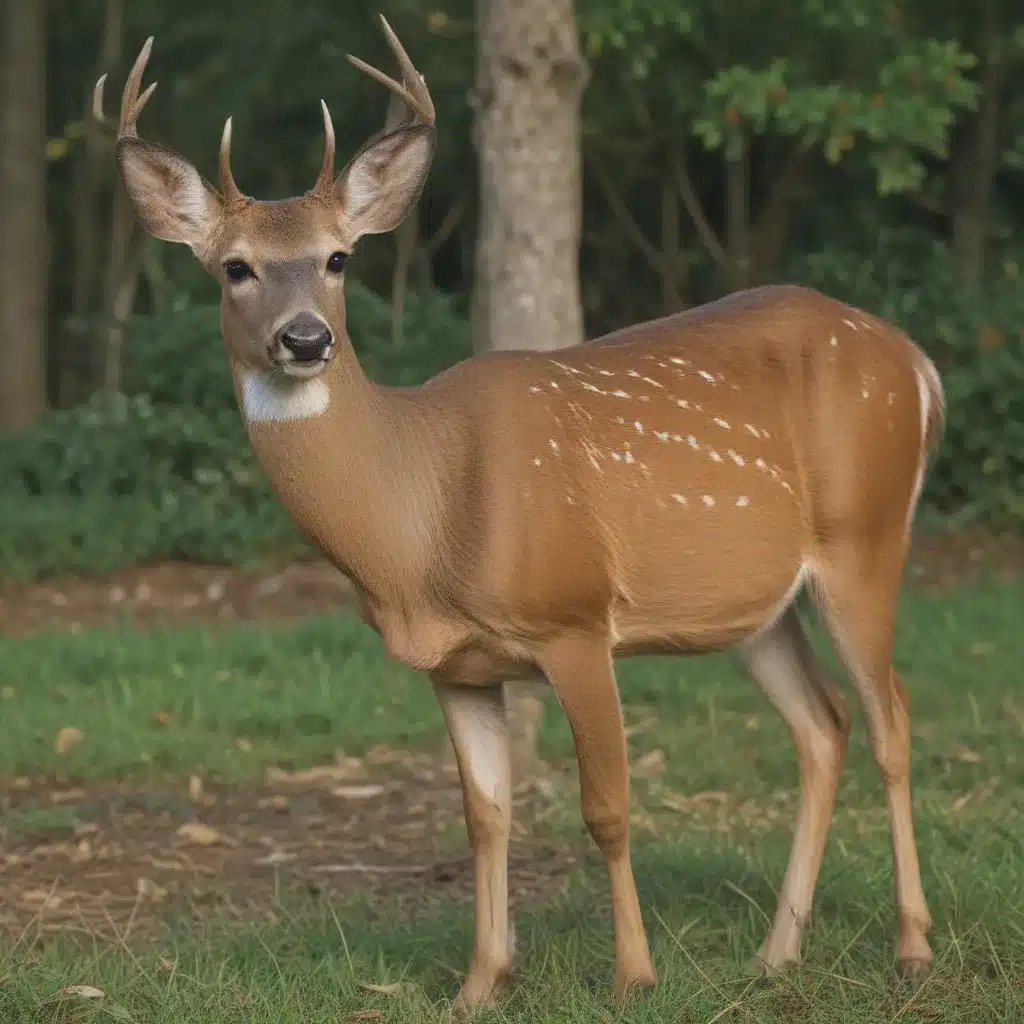
Outsmarting the Antlered Invaders
As a passionate gardener in Temecula, California, I’ve had my fair share of battles with the relentless four-legged visitors that prowl our neighborhood – the white-tailed deer. These graceful creatures may be a delight to spot in the wild, but when they turn my carefully curated garden beds into their personal salad bar, it’s a different story altogether.
Determined to find non-harmful ways to protect my beloved plants, I’ve delved into the vast arsenal of strategies available to keep deer at bay. Through trial and error, I’ve discovered a mix of measures that have worked wonders for me. From physical barriers that frustrate their attempts to olfactory deterrents that persuade them to look elsewhere for their next meal, I’ve found that a multifaceted approach is essential, as what works like a charm for one gardener might only slightly inconvenience another’s antlered adversaries.
Understanding deer behavior is the first step in outsmarting these voracious visitors. Deer, like the white-tailed deer I often encounter, aren’t just aimlessly wandering – they’re on a quest for food, and they’re often incredibly hungry. Biologists estimate that deer can consume around 6 to 8 pounds of food per day, and watching them, it feels like even more! Their preferred habitats are typically edge areas where the forest meets an open space, offering them a variety of food sources.
Deterring Deer with Scents and Sights
One of the most effective ways I’ve found to keep deer at bay is by targeting their sensitive noses and taste buds. Homemade repellents, such as a mixture of eggs and baking powder in water, can effectively discourage them from chomping on my plants. Deer-off sprays and other commercially available options that use a combination of ingredients like rotten eggs and essential oils have also worked wonders for me.
But it’s not just about scents – I’ve found that unexpected sights and sounds can also do the trick. Fluttering fabric softener strips, strategically placed wind chimes, and motion-sensor water sprayers (like the Scarecrow brand) have all helped to keep my deer visitors at a safe distance. And let’s not forget the power of predator urine – coyote urine in particular has been a game-changer, as the scent gives deer the impression that danger lurks nearby.
Designing a Deer-Resistant Landscape
While I can’t fence my entire property due to village regulations, I’ve found that a well-designed landscape can be an effective deterrent. As landscape design expert Karen Chapman suggests, focusing on hardscape elements like pathways, walls, and water features can create a sense of order that helps to distract the eye from any damage to the surrounding plant life.
When it comes to plant selection, I’ve learned to prioritize deer-resistant varieties that deer find less appealing. According to the Rutgers University plant list, certain plants are ranked from A to D based on their resistance, with A and B being the best options for my foundation plantings. While there are no guaranteed “deer-proof” plants, these varieties are less likely to suffer a deer death blow.
Layering and Blending for Camouflage
Another key strategy I’ve employed is to create layers and blends in my planting designs. By incorporating a mix of evergreen and deciduous plants, I’ve found that any damage caused by deer browsing is less noticeable, as the diversity of foliage and form helps to camouflage the impact. As Karen Chapman suggests, a single-species hedge or privacy barrier can make any missing sections painfully obvious, while a blend of species helps to disguise the damage.
I’ve also discovered the power of strategic plant placement. By positioning a dense row of deer-resistant plants at the perimeter of my property, I can create a “hedge” that encourages the deer to move along without lingering to feast on my more appealing specimens. And by placing large, thorny shrubs at the entry points to my garden beds, I’ve successfully redirected the deer’s movements, preventing them from trampling through and decimating my plants.
Protecting Special Treasures
Even with all these strategies in place, I know that certain plants will always be a temptation for the deer. That’s why I’ve turned to creative solutions to safeguard my most prized possessions, like my beloved container gardens.
As a renowned container gardening expert, I’m not afraid to use some top botanical treats in my arrangements, knowing that I can rely on consistent deer repellent applications to protect them. Whether it’s Liquid Fence or the deer-resistant Deer Out spray, I make sure to reapply these deterrents regularly, especially after rain, to keep my container displays safe from hungry visitors.
Embracing Coexistence
The truth is, there’s no one-size-fits-all solution when it comes to keeping deer at bay. Each garden and each set of deer visitors is unique, requiring a tailored approach. But through my experiences, I’ve learned that the key to success lies in embracing creativity, adaptability, and a deep understanding of deer behavior.
As I continue to explore the world of landscape design and construction in Temecula, California, I’m committed to finding new and innovative ways to coexist peacefully with the deer that call our neighborhood home. After all, with a little ingenuity and determination, we can all find ways to create beautiful, deer-resistant gardens that thrive, even in the face of these hungry, four-legged invaders.

