

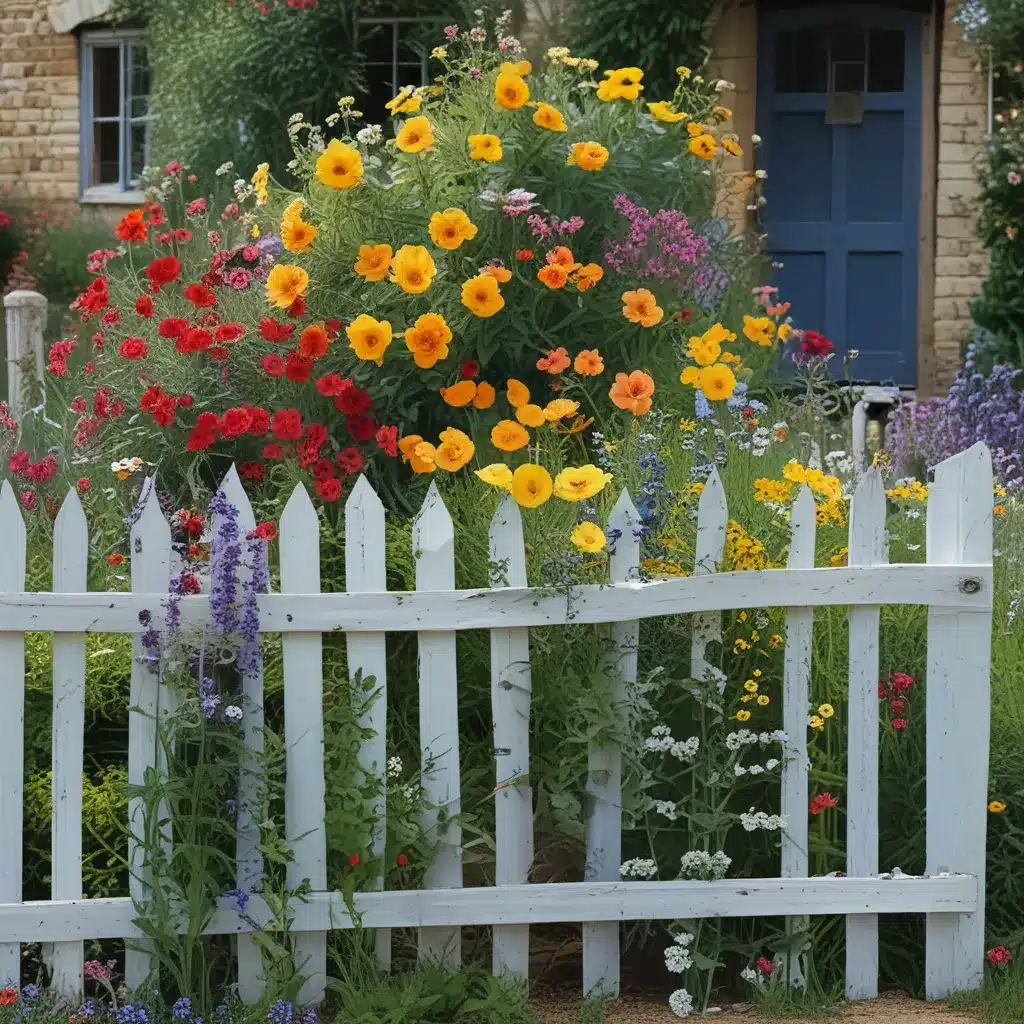
Embracing the Untamed Charm of Cottage Gardens
Ah, the allure of the cottage garden – where vibrant blooms and lush foliage collide in a symphony of delightful chaos. As a landscape designer, I’ve always been captivated by the effortless elegance of these charming oases, and I’m thrilled to share my passion with you today.
You see, cottage gardens are the antithesis of the rigidly manicured landscapes we so often encounter. They’re a celebration of nature’s wild and whimsical side, where order takes a backseat to the joyful abandon of self-seeding plants and cascading vines. It’s a style that embraces the beauty in imperfection, inviting you to dive headfirst into a world of color, texture, and fragrance.
But don’t be fooled – crafting a truly captivating cottage garden is no mere happy accident. It takes a keen eye, a green thumb, and a willingness to let go of control. As I’ve learned from my own trials and triumphs, the secret lies in striking the perfect balance between structure and spontaneity, classic and contemporary.
Mastering the Art of Cottage Garden Design
One of the first things I discovered in my journey to create a stunning cottage garden for a client in Temecula, California, was the importance of selecting the right plant palette. Cottage garden plants are the stars of the show, and they come in a dazzling array of shapes, sizes, and hues. From the timeless allure of old-fashioned roses to the cheerful exuberance of hollyhocks and the delicate charm of foxgloves, each bloom has the power to captivate the senses.
But it’s not just about individual plants – it’s about how they interact and intertwine, creating a tapestry of color and texture that seems to flow effortlessly across the landscape. As I planned out my client’s garden, I drew inspiration from the concept of drift planting – arranging plants in naturalistic groupings that mimic the way they might grow in the wild. This approach not only adds to the casual, rambling aesthetic but also helps to create a sense of cohesion and balance throughout the space.
Of course, no cottage garden is complete without a nod to the past. As garden designer Tracy Foster advises, looking to history can be a valuable source of inspiration when it comes to selecting the right plants. Think about the varieties that would have graced the gardens of bygone eras – the fragrant heirloom roses, the whimsical sweet peas, the stately hollyhocks. By incorporating these classic cottage garden favorites, you can imbue your space with a timeless charm that resonates on a deeper level.
Embracing the Unexpected: Cottage Garden Flourishes
Of course, the beauty of cottage gardening lies not just in the plants themselves, but in the way they’re woven together to create a truly immersive experience. As I worked with my client to bring their vision to life, I couldn’t help but be drawn to the myriad of delightful details that make cottage gardens so captivating.
Take, for instance, the use of vertical elements like trellises, arbors, and pergolas. These structures not only provide a framework for climbing vines and roses but also help to create a sense of depth and drama, drawing the eye upward and inviting you to explore the garden from a new perspective. And let’s not forget the whimsical charm of meandering pathways, which beckon you to wander and discover the garden’s many hidden treasures.
But perhaps one of my favorite aspects of cottage gardening is the way it embraces the unexpected. As the blog at Joyful Noise so aptly puts it, “The cottage garden is more unplanned than a traditional garden. That’s why growing one from seed is ideal.” By allowing self-seeding plants to take hold and flourish, you create a sense of organic spontaneity that simply can’t be replicated in a more rigidly designed space.
Bringing the Cottage Garden Aesthetic Home
As I guided my client through the process of transforming their Temecula, California landscape into a charming cottage-inspired oasis, I couldn’t help but be struck by the universal appeal of this style. Whether you’re working with a sprawling country estate or a cozy urban backyard, the principles of cottage gardening can be adapted to suit any space.
The key, I’ve found, is to embrace the idea of slow gardening – allowing the garden to evolve organically over time, rather than trying to force it into a predetermined mold. It’s about curating the plant display, letting self-seeding favorites take hold, and striking a balance between structure and wild abandon.
And let’s not forget the power of personal expression. As garden designer Margaret Hensel so eloquently states, “Cottage gardens are individual, personal expressions.” By infusing your space with your own unique style and sensibilities, you can create a truly one-of-a-kind oasis that reflects your passion for the natural world.
So, whether you’re starting from scratch or looking to breathe new life into an existing landscape, I encourage you to let your imagination run wild and embrace the captivating charm of the cottage garden. After all, as the team at A1 Landscape Construction in Temecula, California can attest, the true magic of these gardens lies in their ability to transport us to a world of enchantment and delight.
Embracing the Art of Cottage Gardening
As I’ve discovered through my own experiences, the art of cottage gardening is a delicate balance of structure and spontaneity, classic and contemporary. It’s about honoring the past while embracing the present, and letting the natural world take the lead in crafting a space that is both visually stunning and deeply, sensorially engaging.
One of the key elements I’ve found in successful cottage garden design is the careful curation of the plant palette. From the timeless allure of old-fashioned roses to the cheerful exuberance of hollyhocks and the delicate charm of foxgloves, each bloom has the power to captivate the senses and contribute to the overall tapestry of the garden.
But it’s not just about individual plants – it’s about how they interact and intertwine, creating a sense of organic flow and harmony. As I planned out my client’s Temecula, California garden, I drew inspiration from the concept of drift planting, arranging the plants in naturalistic groupings that mimic the way they might grow in the wild. This approach not only adds to the casual, rambling aesthetic but also helps to create a sense of cohesion and balance throughout the space.
Of course, no cottage garden is complete without a nod to the past. As garden designer Tracy Foster advises, looking to history can be a valuable source of inspiration when it comes to selecting the right plants. By incorporating classic cottage garden favorites like fragrant heirloom roses, whimsical sweet peas, and stately hollyhocks, you can imbue your space with a timeless charm that resonates on a deeper level.
But the true magic of cottage gardening lies not just in the plants themselves, but in the way they’re woven together to create a truly immersive experience. As I worked with my client to bring their vision to life, I couldn’t help but be drawn to the myriad of delightful details that make these gardens so captivating – from the use of vertical elements like trellises and arbors to the whimsical charm of meandering pathways.
And perhaps one of my favorite aspects of cottage gardening is the way it embraces the unexpected. As the blog at Joyful Noise so aptly puts it, “The cottage garden is more unplanned than a traditional garden. That’s why growing one from seed is ideal.” By allowing self-seeding plants to take hold and flourish, you create a sense of organic spontaneity that simply can’t be replicated in a more rigidly designed space.
Cultivating Your Own Cottage Garden Oasis
As I’ve guided my clients through the process of transforming their landscapes into charming cottage-inspired oases, I’ve come to appreciate the universal appeal of this style. Whether you’re working with a sprawling country estate or a cozy urban backyard, the principles of cottage gardening can be adapted to suit any space.
The key, I’ve found, is to embrace the idea of slow gardening – allowing the garden to evolve organically over time, rather than trying to force it into a predetermined mold. It’s about curating the plant display, letting self-seeding favorites take hold, and striking a balance between structure and wild abandon.
And let’s not forget the power of personal expression. As garden designer Margaret Hensel so eloquently states, “Cottage gardens are individual, personal expressions.” By infusing your space with your own unique style and sensibilities, you can create a truly one-of-a-kind oasis that reflects your passion for the natural world.
So, whether you’re starting from scratch or looking to breathe new life into an existing landscape, I encourage you to let your imagination run wild and embrace the captivating charm of the cottage garden. After all, as the team at A1 Landscape Construction in Temecula, California can attest, the true magic of these gardens lies in their ability to transport us to a world of enchantment and delight.

