

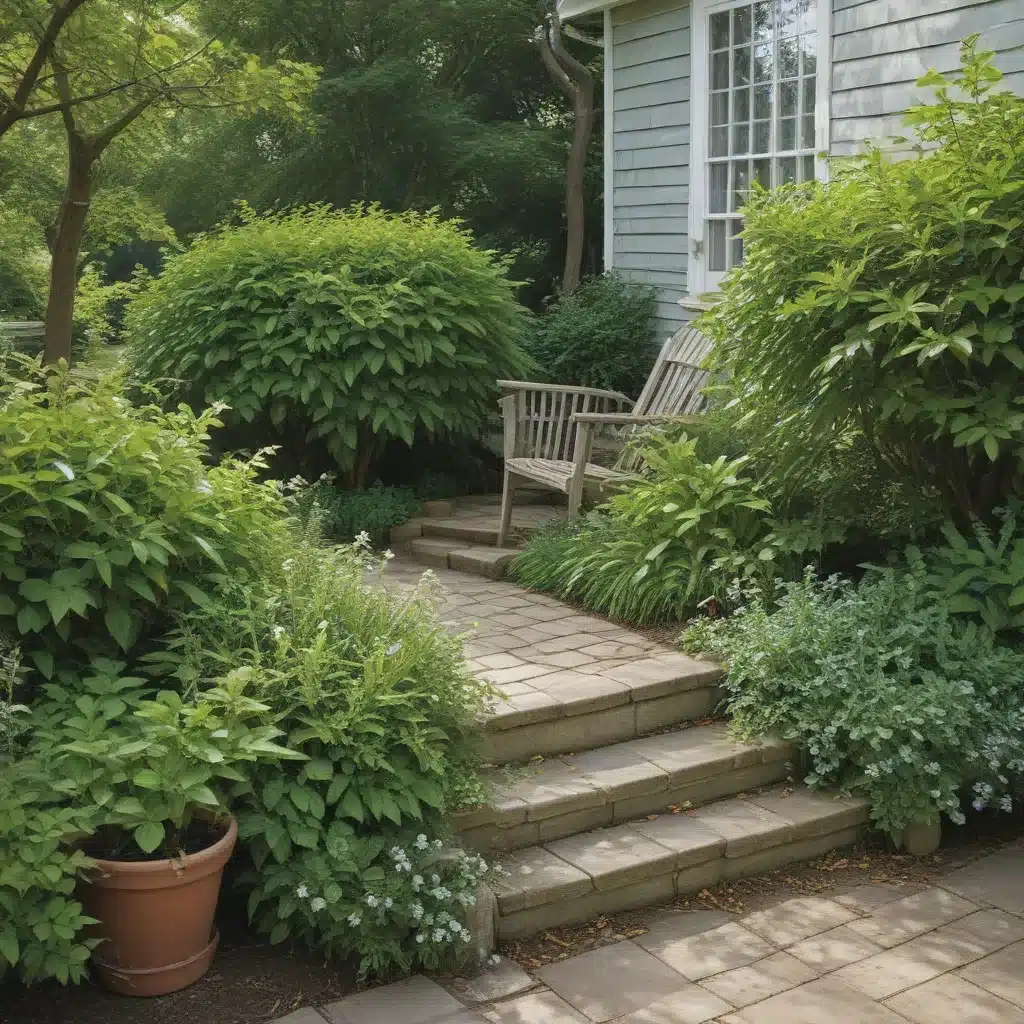
Transforming a Neglected Eyesore into a Verdant Oasis
I’ll never forget the day I stumbled upon my new favorite garden spot. I was driving to work, mind occupied with the usual to-do list, when something caught my eye. A man was clearing underbrush on a wooded lot, and I couldn’t resist stopping to take a closer look. Little did I know that this chance encounter would inspire the creation of my most treasured garden hideaway.
As I approached the man, whom I later learned was named Russ Walters, I couldn’t help but notice the dense tangle of brambles, nettles, and weedy shrubs that consumed the area. The soil was perpetually moist, and the space had become a dumping ground for garden refuse, leaves, and broken branches. Determined to transform this neglected eyesore, I hired Russ on the spot to clear the way.
With Russ and my family’s help, we set out to uncover the hidden potential of this shady, wet stretch of land. As we worked, carefully clearing out the overgrowth and turning over the soil, we discovered a dry, rocky berm at the outermost edge, with a natural creek bed flowing along one side. It was an area of lovely natural beauty, just waiting to be reimagined.
Tackling Drainage and Soil Challenges
One of the biggest challenges we faced was the issue of drainage. While the natural creek bed provided an outlet for excess water, the soil in other areas was becoming saturated and nearly impossible to work with. It was like walking on cooked oatmeal! To address this, we dug a series of drainage channels, about a foot wide and deep, to allow the water to run off and raise the surrounding soil levels for better drainage.
As the article from Fine Gardening suggests, “If you have a wet site without the benefit of a natural place for the water to go like a stream, you’ll have to create a solution.” We took their advice and also created a natural pond next to the berm, digging out an area about 20 feet long, 10 feet wide, and 18 inches deep, and lining the edges with rocks of various sizes.
With the drainage issues sorted out, we turned our attention to the soil. The combination of years of leaf fall and garden refuse had created a rich, humus-like texture in some areas, but in others, the soil was dense and clay-like. As the Fine Gardening article suggests, we worked in as much organic matter as we could, using well-aged horse manure and compost. This helped to aerate the soil and create the ideal conditions for the plants we had in mind.
Selecting the Perfect Plants for a Shady, Damp Oasis
Now that the site was prepared, the real fun began – choosing the plants that would thrive in this unique, shady, and damp environment. Inspired by the towering oak tree that stood alongside the pond, I designed the beds to be low, ensuring the tree’s majestic presence would remain the focal point.
As the Fine Gardening article notes, “Many plants thrive in damp soil,” and I was eager to experiment. Some of my favorite discoveries included the bold, beautiful leaves of hostas, golden meadowsweet, and Ligularia ‘The Rocket.’ These plants with their large, striking foliage provided the perfect contrast to the feathery ferns and fine-leaved sedges that I interspersed throughout the garden.
To add pops of color and texture, I incorporated Japanese primroses, Siberian irises, and summer snowflakes, as well as some tropical-inspired perennials like Canna ‘Pretoria,’ Colocasia ‘Black Magic,’ and Colocasia ‘Illustris.’ The result was a lush, layered tapestry of foliage and blooms that celebrated the unique microclimate of this shady, damp oasis.
Ongoing Maintenance and the Rewards of Patience
As with any garden, this one requires diligent maintenance to keep it thriving. Each fall, we meticulously rake out fallen leaves and cut back the perennials (except for the grasses, which we leave standing for winter interest). We then spread a thick layer of mulch, using wood chips generously donated by local tree trimmers.
In spring, I broadcast a slow-release fertilizer on the beds and top-dress with well-aged horse manure or compost, especially for the heavy feeders. The drainage channels also need annual attention, as we dig out the accumulated sandy silt and incorporate it back into the soil.
The pond requires periodic cleaning as well, with a late-summer dredging to remove fallen leaves and silt. I find this task incredibly satisfying, as I can then use the nutrient-rich material to enrich the surrounding plantings.
While it may have seemed like an insurmountable challenge at first, as the Fine Gardening article suggests, sometimes it’s hard to see the true potential of a space until you take the first step. By hiring Russ Walters and working alongside my family, I was able to transform this neglected area into a lush, verdant oasis that brings me immense joy and satisfaction every time I step into it.
If you’re faced with a similar shady, damp spot on your property, don’t be discouraged. With a little creativity, hard work, and the right plant selections, you too can create a stunning and serene garden sanctuary. Who knows, you might even stumble upon your new favorite hideaway, just like I did. To start your own journey, be sure to visit A1 Landscape Construction in Temecula, California, where our team of experts can help you unlock the true potential of your outdoor spaces.

