

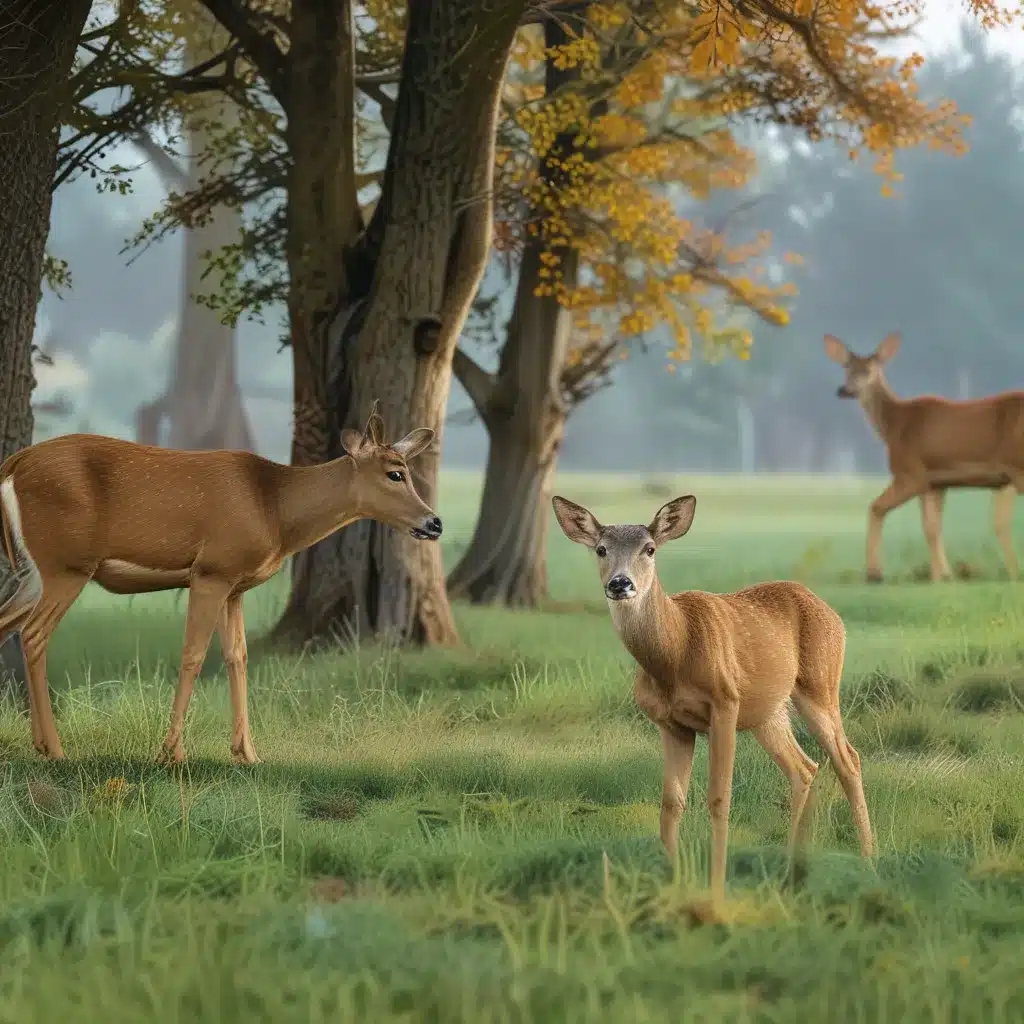
Battling Bambi: Protecting Your Temecula Garden from Hungry Herbivores
As a proud homeowner in Temecula, California, I’ve learned the hard way that our lush, vibrant gardens are catnip for the local deer population. Just when I think I’ve outsmarted the four-legged foragers, they come back with a vengeance, munching on my carefully curated plants like they’re a gourmet salad bar. It’s enough to make a gardener want to throw in the trowel!
But fear not, fellow Temecula green thumbs – I’m here to share my hard-earned wisdom on how to create a deer-resistant oasis. From clever plant choices to ingenious deterrents, we’re going to transform our yards into sanctuaries that even the hungriest of Bambis will think twice about approaching.
Outsmarting Opportunistic Eaters
Let’s start by understanding the mindset of our four-legged foes. Deer are opportunistic eaters, happily grazing on whatever delectable morsels we’ve cultivated in our gardens. As their natural habitats shrink, they’ve learned to coexist with us humans, and our carefully manicured landscapes have become a veritable buffet. According to the experts at Michigan State University Extension, deer will happily feast on everything from evergreen shrubs and ornamental trees to lush herbaceous plants and even fruit trees.
But just because they’re determined foragers doesn’t mean we’re powerless to stop them. The key is to approach the problem from multiple angles, creating a multilayered defense that will have even the craftiest of Bambis throwing in the towel (or should I say, the antlers?).
Deer-Resistant Plant Choices
The first line of defense is choosing plants that are naturally less appealing to our herbivorous neighbors. According to the experts at the University of Minnesota Extension, deer tend to avoid plants with certain characteristics, such as fuzzy, coarse, or fern-like foliage, as well as those with strong scents or spines.
Some of my go-to deer-resistant options include:
– Lavender, with its fragrant, silvery-gray leaves
– Ornamental grasses, like fountain grass, with their delicate, swaying plumes
– Hellebores, or Lenten roses, which are toxic to deer
– Ferns, like the graceful maidenhair fern, with their delicate, lacy fronds
– Catmint, with its aromatic, minty leaves
I’ve also had success with woody plants like pines, spruces, and boxwoods, as well as flowering shrubs like weigela, spirea, and ninebark. The key is to experiment and see what works best in your particular Temecula microclimate.
Deterrents and Diversions
Of course, even the most deer-resistant plants can’t always withstand the relentless hunger of our four-legged friends. That’s where deterrents and diversions come into play.
One of my favorite tactics is to use a combination of bad-tasting and bad-smelling repellents, which can create an unpleasant sensory experience for the deer. As the experts at the University of Minnesota Extension explain, these repellents often contain ingredients like capsicum pepper, putrid egg solids, and garlic, which can effectively deter deer from munching on your plants.
I also like to use physical barriers, such as netting or small fencing, to protect my most vulnerable plants. Something as simple as a wire cage or tomato cage can be a game-changer, keeping those greedy grazers at bay.
And let’s not forget about diversions! By strategically planting deer-resistant species around the perimeter of my garden, I can create a natural “buffer zone” that encourages the deer to graze elsewhere. It’s like a botanical version of the old “give ’em an inch, they’ll take a mile” adage.
Embracing the Unexpected
Of course, even the best-laid plans can’t always outsmart Mother Nature’s most persistent creatures. As the experts at Michigan State University Extension point out, deer can be unpredictable, and they may even decide to nibble on plants they’ve previously avoided.
When that happens, I try to keep a sense of humor and embrace the unexpected. After all, gardening is a constant dance with the natural world, and sometimes we have to let Bambi take the lead. I might have to do a little more pruning or replanting, but I know that with a little creativity and resilience, I can keep my Temecula garden thriving, even in the face of hungry herbivores.
And who knows, maybe one day I’ll catch a glimpse of a curious fawn peeking out from the edge of the woods, reminding me that we’re all part of the same delicate ecosystem. Until then, I’ll keep on hatching my deer-proof plans, one strategic planting and crafty deterrent at a time.
Tying it All Together
As a proud Temecula homeowner and avid gardener, I know the challenges of coexisting with our four-legged friends all too well. But by understanding their behavior, choosing the right plants, and employing a strategic mix of deterrents and diversions, we can create gardens that are both beautiful and deer-resistant.
So, fellow Temecula green thumbs, let’s put on our thinking caps and get to work. With a little ingenuity and a whole lot of determination, we can transform our yards into oases that even the hungriest of Bambis will admire from afar. And who knows, maybe we’ll even catch a glimpse of those curious fawns peeking out from the edge of the woods, reminding us that we’re all part of this delicate dance called life.
If you’re ready to take your Temecula garden to new, deer-proof heights, be sure to check out the resources and services available at A1 Landscape Construction. Their team of experts can help you create a verdant, wildlife-friendly oasis that will be the envy of the neighborhood – even the four-legged residents.

